

From Beginners to Experts: How CoinMinutes Serves the Entire Crypto Community
You've got Bitcoin hitting new highs one day and crashing the next. Everyone's talking about DeFi, NFTs, and something called "yield farming" that sounds like actual farming but definitely isn't. Then there's your cousin who made $50,000 on Dogecoin and won't shut up about it.
CoinMinutes gets it. They built their platform because they saw what everyone else sees - crypto education is either too basic or way too complicated. You're either reading "Bitcoin for Dummies" or drowning in whitepapers about blockchain consensus mechanisms.
Here's what makes CoinMinutes different: they don't treat you like you're stupid, but they also don't assume you have a computer science degree. They meet you where you are and help you get where you want to go.
A recent survey by the Blockchain Association found that 73% of Americans want to learn about cryptocurrency, but 68% say they don't know where to start. That's the gap CoinMinutes fills.
What is CoinMinutes?
The Vision and Mission of CoinMinutes
CoinMinutes Crypto started with a simple idea: crypto shouldn't be this hard to understand.
The founders watched friends struggle with basic concepts like setting up wallets or understanding why Bitcoin's price moves like a roller coaster. They saw smart people give up because crypto felt like learning a foreign language while riding a bull.
So they built something different. Not another news site pumping the latest meme coin. Not another trading platform trying to get you to YOLO your savings. Just good, honest education that doesn't make you feel dumb for asking basic questions.
Overview of CoinMinutes' Platform and Services
You've got your basic tools - guides that explain stuff without making your head hurt. Video tutorials that show you exactly what buttons to click. Forums where you can ask questions without getting roasted by crypto bros.
But there's also advanced stuff. Market analysis that goes beyond "number go up, number go down." Technical charts that actually help you understand what you're looking at. Research reports that read like they were written by humans, not robots.
Everything connects. Start with a beginner guide, join a discussion about it, take a quiz to test what you learned, then move on to the next topic. No jumping around random YouTube videos hoping you're getting good info.
They've got about 200,000 active users now, from complete beginners to people managing million-dollar crypto portfolios. That range tells you something about how they've built their content.
How CoinMinutes Supports Crypto Beginners
Easy-to-Understand Educational Resources
Remember learning to drive? Nobody started by explaining internal combustion engines. You learned where the gas pedal was, how to steer, and why you shouldn't text while driving.
CoinMinutes treats crypto the same way.
Their "What is Bitcoin?" guide doesn't start with SHA-256 hashing algorithms. It starts with "Bitcoin is digital money that nobody controls." Then it builds from there, step by step, until you actually get it.
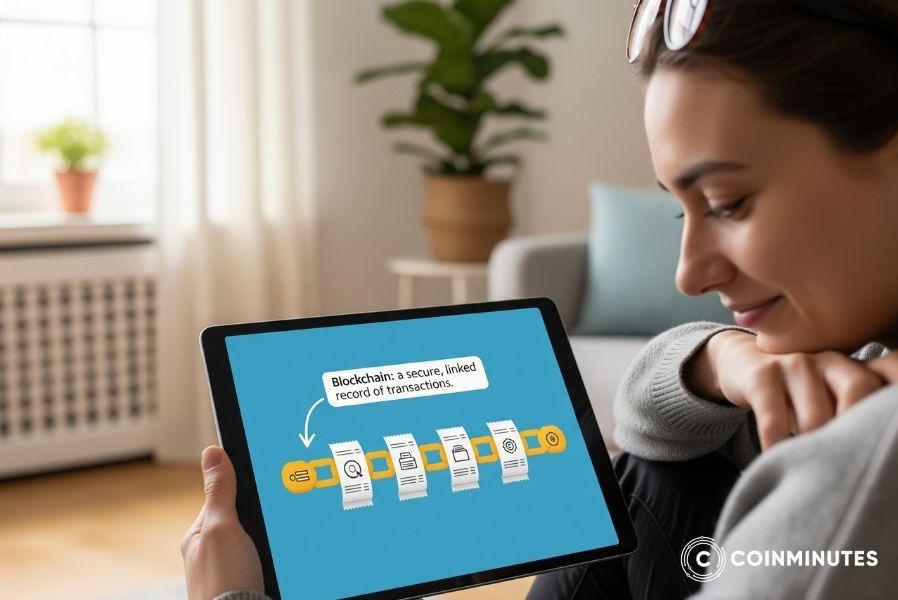
Take their wallet security guide. Instead of diving into cryptographic key theory, they use this analogy: your wallet address is like your email address - you can share it. Your private key is like your email password - never share it. Simple, but it works.
The visual stuff's great too. They've got infographics that show how blockchain works using a chain of paper receipts. Videos where you watch someone set up their first wallet in real-time, mistakes and all.
I personally love their "Crypto Myths Busted" series. They tackle stuff like "Bitcoin uses more energy than small countries" (true, but here's why that's not necessarily bad) and "Crypto is only for criminals" (statistically false - cash is still the criminal's best friend).
Guided Learning Paths and Starter Kits
Here's where CoinMinutes really shines - they don't just throw information at you and hope it sticks.
Their beginner path looks like this:
What is cryptocurrency and why should I care?
Understanding Bitcoin (the gateway drug of crypto)
Setting up your first wallet (with actual screenshots)
Making your first purchase (starting small, obviously)
Basic security (because getting hacked sucks)
Each module takes about 20 minutes. You can knock out the whole path in a weekend or spread it over a month. Your choice.
The quizzes aren't trying to trick you. They're checking if you actually understood what you just read. Get something wrong? The platform shows you exactly which section to review.
Sarah, a teacher from Ohio, went from "crypto skeptic" to buying her first $50 of Bitcoin in three weeks using their beginner path. Now she's teaching a personal finance class that includes a crypto section.
Responsive Community Support
Learning crypto alone is like trying to assemble IKEA furniture without the little pictures - technically possible, but why torture yourself?
CoinMinutes Cryptocurrency built their community features knowing that people learn better when they can ask questions and get real answers from real people.
Their forums aren't like Reddit, where asking a basic question gets you buried in downvotes. They've got separate sections for beginners, and the community guidelines are pretty clear about being helpful, not condescending.
Live chat's available during business hours (EST), and response times average about 15 minutes. These aren't chatbots - they're actual humans who know crypto and can explain things in plain English.
The FAQ section's constantly updated based on what people actually ask. Right now, the top questions are about taxes (boring but important), choosing between different exchanges, and whether it's too late to get into crypto (spoiler: it's not).
Empowering Intermediate Users for Growth
In-Depth Analysis and Market Insights
Once you've got the basics down, you start wanting more than "Bitcoin goes up, Bitcoin goes down" explanations.
CoinMinutes' daily market reports dig into the why. When Bitcoin dropped 8% last Tuesday, they didn't just report the price. They explained the correlation with tech stocks, the impact of Federal Reserve statements, and why long-term holders weren't panicking.

Their weekly trend reports are where things get interesting. They'll spend 2,000 words analyzing why institutional adoption matters, backed by data from companies like MicroStrategy (they own $5.9 billion in Bitcoin) and Tesla's crypto experiments.
The coin reviews are thorough without being boring. When they covered Solana, they explained the technical advantages (fast, cheap transactions) and the risks (network outages, centralization concerns) in language you don't need a computer science degree to understand.
Marcus, a software developer from Austin, credits their analysis with helping him build a portfolio that's up 340% over two years. "I was just buying random coins based on Reddit hype before," he says. "CoinMinutes taught me to actually research what I was buying."
Product and Platform Reviews
Choosing a crypto exchange is like choosing a bank, except banks don't randomly exit scam with your money.
CoinMinutes tests everything they review. Their Coinbase review includes actual screenshots of the interface, fee calculations based on different transaction sizes, and honest assessments of customer service (spoiler: it's not great).
Their DeFi platform reviews come with serious warnings. They'll explain how Uniswap works and why it's revolutionary, but they'll also tell you about impermanent loss and how people have lost thousands to smart contract bugs.
Nobody's paying them for positive reviews. When Robinhood's crypto features sucked, they said so. When Binance.US had regulatory issues, they warned users.
Opportunities for Skill Development
CoinMinutes weekly webinars cover everything from reading candlestick charts to understanding DeFi yield farming. Last month's session on crypto taxes had 5,000 attendees - apparently everyone needs help with that one.
The workshops are hands-on. Their "Technical Analysis 101" workshop walks you through setting up TradingView, identifying support and resistance levels, and recognizing common patterns. By the end, you're analyzing real charts with real data.
Community challenges keep things fun. The January "Paper Trading Challenge" had 1,200 participants competing to see who could make the best fake trades over 30 days. Winner got bragging rights and a hardware wallet.
These aren't participation trophy events. The competition's real, and you learn from seeing how others approach the same problems.
Advanced Tools and Expert-Level Content
Technical Analysis and Research Reports
Professional traders use Bloomberg terminals that cost $24,000 per year. CoinMinutes gives you similar data for the price of a Netflix subscription.
Their on-chain analysis tools show you what's really happening with Bitcoin. You can see how many coins haven't moved in over a year (about 60% - these are the "HODLers"), how much institutional money is flowing in, and whether the network's getting more or less decentralized.

The charting tools include everything you'd find on TradingView Pro. RSI, MACD, Bollinger Bands - all the technical indicators traders use to time their entries and exits. If you don't know what those mean yet, they've got guides for that too.
Their research reports read like investment bank analysis, just without the $500-per-report price tag. The recent deep dive into Ethereum's upcoming upgrades was 40 pages of detailed technical and economic analysis.
David, who manages a crypto hedge fund with $50 million in assets, says he checks CoinMinutes' research before making major portfolio moves. "Their Ethereum report called the price run-up three months before it happened," he notes.
Staying Ahead with Industry Innovations
Crypto moves fast. Blink and you'll miss the next big thing.
CoinMinutes' early alert system caught the DeFi boom six months before mainstream media. They were talking about NFTs when most people thought they were just expensive JPEGs. They covered the Lightning Network when it was still experimental.
Their deep dives into new protocols are legendary. When Arbitrum launched, their 5,000-word explainer broke down exactly how it works, why it matters, and what it means for Ethereum's scaling problems. Written in English, not engineer-speak.
The emerging sectors coverage is where they really earn their reputation. They identified the "DeFi 2.0" trend, explained why layer-2 solutions would explode in popularity, and predicted the GameFi boom before Axie Infinity hit $4 billion in trading volume.
Building a Thriving, Inclusive Crypto Community
The comment sections on CoinMinutes' articles turn into mini-masterclasses. Someone will ask about staking rewards, and three different users will share their experiences with different platforms. Real numbers, real returns, real problems they've encountered.
Their Discord server has 50,000 members across time zones. There's always someone online to answer questions or discuss market movements. The "Daily Discussion" thread gets hundreds of messages during volatile market days.
Social media integration means conversations continue on Twitter, LinkedIn, and Reddit. Users share articles, debate points, and help each other understand complex topics across platforms.
Why CoinMinutes is the Go-To Resource for Every Crypto Enthusiast
Unmatched Breadth and Depth of Content
Most crypto sites pick a lane - either beginner content or expert analysis. CoinMinutes built highways between different knowledge levels.
The depth matches the breadth. Their "What is Ethereum?" article is 3,000 words that cover everything from basic smart contracts to advanced scaling solutions. Their Bitcoin technical analysis includes indicators most retail platforms don't even offer.
Quality stays consistent across all levels. The same editorial standards apply whether you're reading a beginner guide or an advanced research report. No AI-generated fluff, no recycled content from other sites.
Content audits happen quarterly. Outdated information gets updated or removed. New developments get covered. When Ethereum switched to proof-of-stake, they had comprehensive explainers ready within 24 hours.
Commitment to Continuous Improvement
Static platforms die in crypto. Technology changes, regulations evolve, and user needs shift.
User feedback drives everything. Monthly surveys ask what's working and what isn't. Feature requests get voted on by the community. The most-requested additions become development priorities.
Platform updates roll out monthly. Recent additions include a crypto tax calculator, a DeFi yield comparison tool, and mobile app push notifications for major market events. Users suggested all three features.
Future planning involves the community. Beta testers get early access to new features and provide feedback before wider releases. Advisory panels of power users help guide strategic decisions.
About the Author
Kent Crouch stumbled into Bitcoin back in 2010 while still nursing a finance hangover from his Oklahoma U days (class of '08, boomer sooner and all that). Started CoinMinutes after getting sick of explaining the same damn crypto concepts to his buddies over beers in NYC.
Got way too many certificates nobody cares about (some Blockchain Council thing, another from ACAMS) but honestly learned everything valuable by losing money on sketchy ICOs and forgotten wallet passwords.
Fun fact: Kent still uses the same crappy laptop from 2016 because he's "scared to transfer the keys" - meanwhile he's telling everyone else to upgrade their security. Classic "do as I say not as I do" situation.
Legitimately knows his stuff though - just don't get him started on the '17 bull run. You'll never escape that conversation.